
Restore Your Smile with Main Line’s Top-Rated Dentists
Philadelphia Magazine Top Dentists 13 Years in a Row | Third-Generation Dentist Since 1916
If you’re missing one or more teeth, you know the struggle. You avoid certain foods and cover your mouth when you laugh. You may even notice your face changing shape as bone loss occurs over time. Dental implants can change that.
At Bryn Mawr Dental Health Group, Dr. John Richardson, Dr. Lynnette Mesina, Dr. Noelle Ling, and Dr. Pegah Ardestani offer permanent, natural-looking tooth replacement that lets you eat, speak, and smile with confidence again.
Trusted by Main Line families for over 50 years. We are located directly in front of the Bryn Mawr train station with free on-site parking.
Why Choose Bryn Mawr Dental Health Group for Dental Implants?
- Philadelphia Magazine Top Dentist: Dr. Richardson has received this honor every year from 2012 through 2024
- Third-generation dentist: Dr. Richardson’s grandfather began practicing in 1916; dentistry is in our blood
- Four experienced dentists: Collaborative care means you benefit from decades of combined expertise
- In-network with major PPOs: We participate in Guardian, Aetna, DHA, and United Concordia to help maximize your benefits
- Convenient Main Line location: Directly in front of the Bryn Mawr train station (easy from Philadelphia) + free onsite parking
- CareCredit financing available: 6-month interest-free payment options
What Are Dental Implants?
A dental implant is a small, biocompatible titanium post that replaces the root of a missing tooth. It’s surgically placed in your jawbone, where it fuses with the bone over several months.
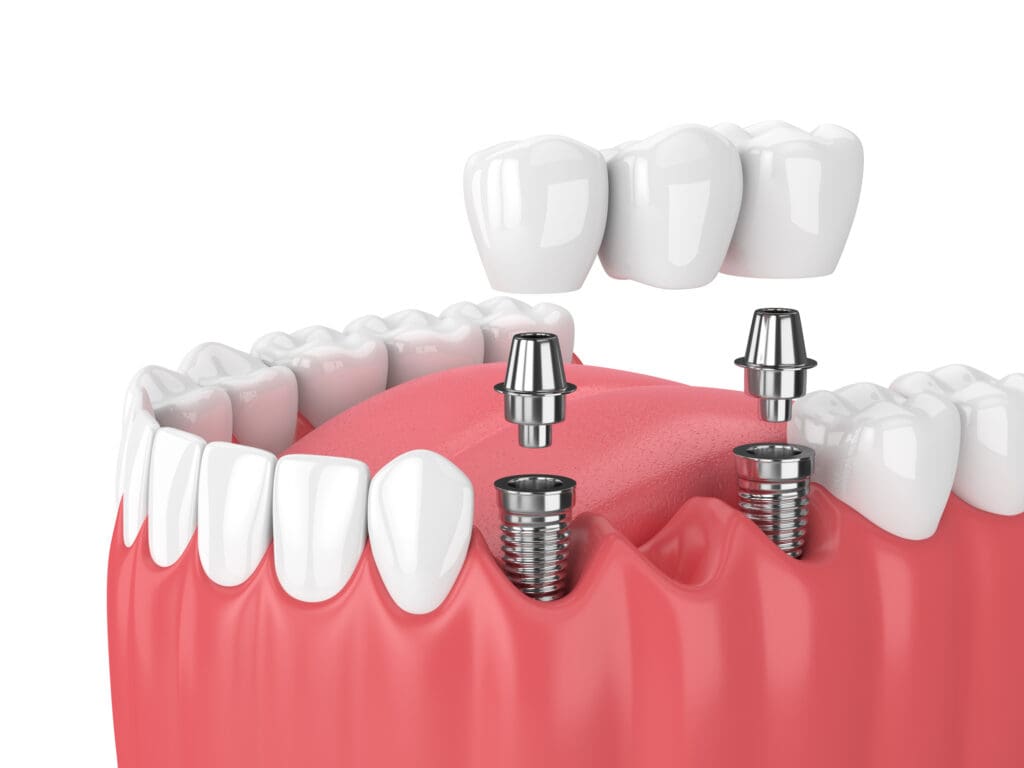
Once healed, the implant is topped with an abutment and a custom-made crown, bridge, or denture. The result looks, feels, and functions just like a natural tooth.
Why implants are better than bridges or dentures:
- Preserve jawbone: Implants stimulate bone growth, preventing the facial collapse that occurs with tooth loss
- Save healthy teeth: No need to grind down adjacent teeth like with traditional bridges
- Permanent stability: No slipping, clicking, or embarrassing moments
- Eat anything: Enjoy steak, corn on the cob, and apples again
Types of Dental Implants We Offer
Single Tooth Implant
Replaces one missing tooth with one implant and a custom crown. Ideal for a single tooth lost because of decay, injury, or wear.
Implant-Supported Bridge
Replaces several missing teeth in a row. Two or more implants support a bridge without requiring crowns on healthy adjacent teeth.
Implant-Supported Denture (Snap-In)
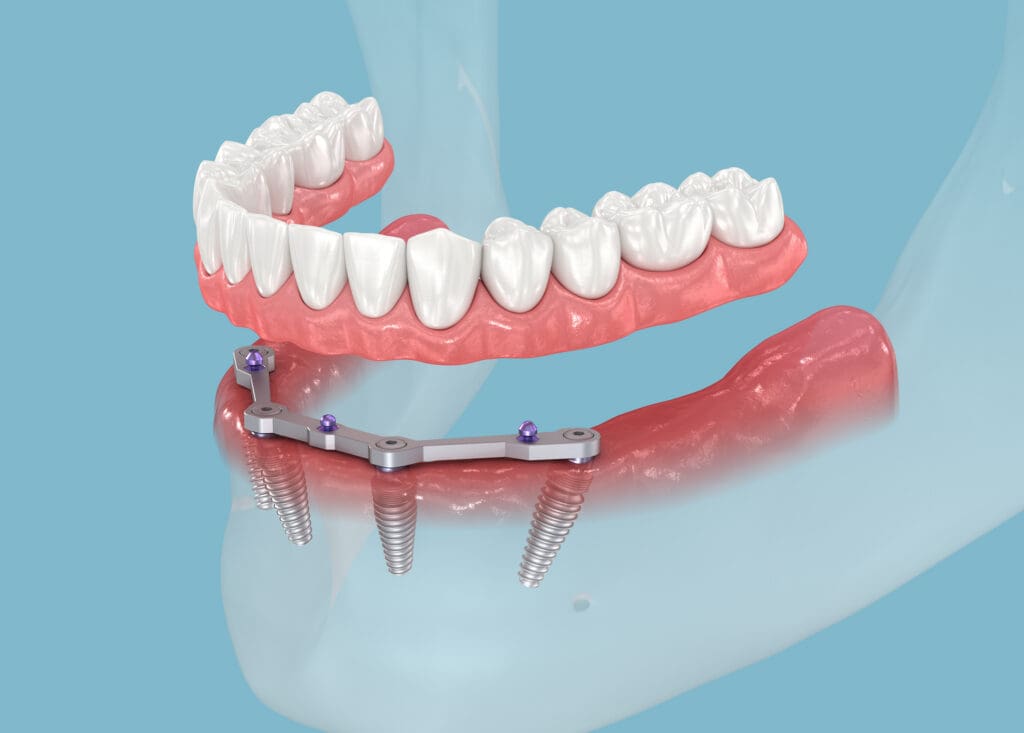
Uses 2-4 implants to secure a removable denture. It snaps into place for excellent stability but can be removed for cleaning.
Full-Arch Fixed Implant Bridge (All-on-X)
Uses 4-6 implants per arch to support a full set of permanent teeth. A complete smile transformation for patients missing most or all teeth.
Mini Dental Implants
Smaller implants stabilize a lower denture when bone density is limited. Mini implants aren’t for everyone, but they’re a great option for select cases.
Bone Grafting & Sinus Lifts (When Needed)
If your jawbone is too thin or soft, we can build it up with grafting. In the upper back jaw, a sinus lift creates space for implants. These steps ensure a strong foundation for long-term success.
Your Dental Implant Journey: What to Expect
Step 1: Consultation & 3D Imaging
We begin with a friendly, no-pressure conversation about your goals and health history. We take digital X-rays or a 3D CBCT scan to evaluate your bone density, gum health, and bite. We’ll discuss options, timeline, costs, and answer every question.
We also check for:
- Gum disease (must be treated first)
- Sufficient bone density (grafting available if needed)
- Any medical considerations (we coordinate with your physician if needed)
Step 2: Personalized Treatment Plan
You’ll receive a clear, written plan that includes:
- Number of implants needed
- Whether grafting is required
- Type of dental restoration (crown, bridge, or denture)
- Complete cost estimate
- Insurance coverage estimate
- Financing options through CareCredit
Step 3: Comfortable Implant Placement
On the day of the procedure, we numb the area completely. For anxious patients, we offer sedation options to help you relax. Using surgical guides for precision, the dentist places the implant into your jawbone.
Many patients are surprised by how quick and comfortable this step feels. In some cases, we can place a temporary tooth the same day, so you never leave without a smile.
Step 4: Healing & Osseointegration (3 to 6 months)
Over several months, your jawbone grows around the implant, creating a permanent bond. During healing, most patients return to normal activities within 1-2 days.
Simple healing tips:
- Stick to soft foods for a few days
- Brush gently around the site
- Take any prescribed medication as directed
Step 5: Abutment & Final Restoration
Once healed, we attach a small connector called an abutment. Then we take precise digital impressions to craft your custom crown, bridge, or denture.
We color-match your new teeth, so they blend seamlessly with your smile. We then secure your final restoration to the implant(s) and adjust it for perfect bite comfort.
Step 6: Long-Term Care & Maintenance
With proper care, your dental implants can last a lifetime.
Simple care routine:
- Brush twice daily with a soft toothbrush
- Floss daily (special implant floss or water flosser recommended)
- Regular dental cleanings every 6 months
- Avoid smoking (slows healing and increases complication risk)