
A complete, confident smile helps you eat, speak, and feel like yourself. If you are missing several teeth or a full arch, dentures can be a reliable, affordable way to restore your smile. Dr. Richardson, Dr. Mesina, Dr. Ling, and Dr. Ardestani help patients choose the right option and guide them every step of the way.
You might need dentures if:
- You are missing many teeth or a full arch
- Your teeth are severely worn, damaged, or loose due to gum disease
- You want a removable option that is more affordable than multiple bridges or implants
Visit Bryn Mawr Dental Health Group for all your denture care needs.
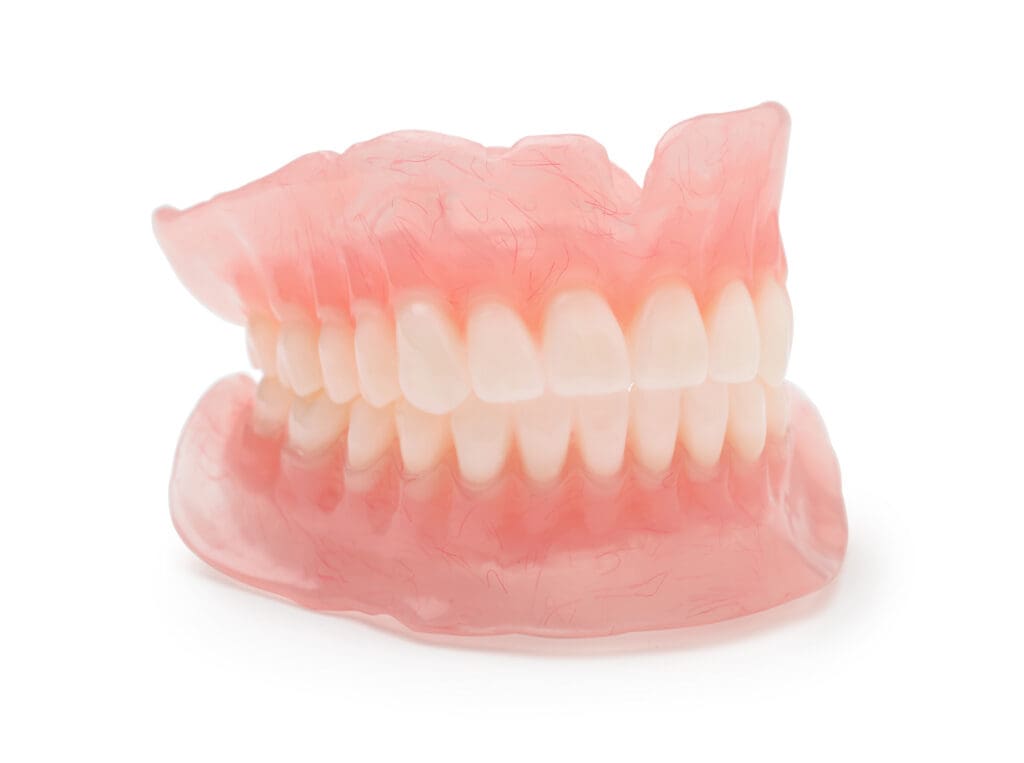
What Are Dentures?
Dentures are custom-made prosthetic teeth that replace missing teeth and the gum tissue that supports them. They are designed to look natural and feel comfortable, so you can smile and function with confidence.
The types of dentures we offer include:
- Full dentures: Replace all teeth in your upper jaw, lower jaw, or both. An upper denture typically covers the palate (roof of the mouth) for support. A lower denture is shaped like a horseshoe to leave room for your tongue.
- Partial dentures: Replace several missing teeth while keeping your healthy natural teeth. Partial dentures clip onto nearby teeth for support and blend in with your smile.
Modern dentures often use acrylic for the base (pink part) and high-quality acrylic or porcelain for the teeth. Some partial dentures may include a thin metal framework for strength or flexible materials for added comfort. The shape, color, and size of the teeth are chosen to match your face and your goals, so the result looks like you.
Dentures improve chewing and speaking, support your lips and cheeks for a fuller facial appearance, and boost your confidence. With good care and routine checkups, dentures can serve you well for years.
What to Expect at Your First Visit
We start with a conversation about your goals and concerns. We examine your mouth, take digital images or X-rays if needed, and review your overall oral health. Together, we discuss your options, such as full dentures or partial dentures, and whether immediate dentures or dental implants in Bryn Mawr might be right for you.
The steps to your new smile may include:
- Impressions and bite records: We take precise molds of your mouth and measure how your jaws meet. This helps us design a denture that fits your gums and your bite.
- Smile design and shade match: You can help choose tooth shape and shade. We aim for a natural, flattering look.
- Try-in appointment: We often test a wax model of your denture. This lets you see the look and lets us fine-tune the fit and bite before we make the final denture.
- Final placement: We deliver, adjust, and polish your finished denture. We give you tips for wearing and caring for it.
Immediate dentures
If you need teeth removed, we can place an immediate denture the same day as extractions. This means you never go without teeth. As your gums heal and shrink, we adjust the fit and often add a soft liner. After healing (usually a few months), you may need a reline or a new final denture for the best long-term fit.
Getting used to your denture
It is normal for dentures to feel different at first. Reading aloud, starting with soft foods, and cutting food into small bites can help. Mild sore spots can happen as your mouth adjusts. We schedule follow-up visits to make small adjustments so your denture feels better and works well. Please call us if anything rubs or feels uncomfortable.
Care and maintenance
- Rinse your denture after meals and brush it daily with a denture brush
- Soak your denture overnight in a denture-cleaning solution or water
- Never use very hot water (it can warp the denture)
- Brush your gums, tongue, and any remaining teeth to keep your mouth healthy
- See us for regular checkups and cleanings
Most dentures last about 5 to 7 years before needing a reline or replacement, because the shape of your gums and jawbone can change over time. Regular visits help keep the fit comfortable and the look bright.
Dentures vs Implant Dentures
Traditional dentures rest on the gums and rely on suction (upper) and muscle control (lower) to stay in place. They are cost-effective and do not require surgery. Many people do very well with them, especially with a precise fit and good home care. Lower dentures can feel less stable than uppers because they have less surface area and must share space with your tongue.
Implant dentures use 2 to 6 small titanium posts placed in the jaw to anchor your denture. There are two main types:
- Snap-in (implant-retained overdenture): The denture “snaps” onto attachments on the implants. You can remove it for cleaning. It is more stable than a traditional denture and helps prevent slipping when eating or speaking.
- Fixed (implant-supported bridge/full-arch): The teeth are permanently attached to implants and are removed only by your dentist. This option feels closest to natural teeth, offers strong chewing power, and can help preserve jawbone.
Key differences to consider:
- Stability and comfort: Implant dentures are usually more secure, especially on the lower jaw. Many patients report easier chewing and clearer speech.
- Bone health: Implants help stimulate the jawbone, which can slow bone loss over time.
- Care: You remove snap-in dentures daily for cleaning. With fixed implant restorations, you brush and clean your mouth with special floss or a water flosser.
- Time and healing: Implants require surgery and a healing period before the final teeth are placed. Some people qualify for same-day teeth. Others need a few months for the implants to integrate with the bone.
- Cost: Implant options cost more up front but may offer long-term value and comfort. We can review estimates and help you navigate benefits.
Who is a good candidate for implant dentures?
You should have healthy gums and enough bone to support implants, or be willing to consider bone grafting if needed. We will review your medical history, take 3D imaging if appropriate, and create a plan that fits your needs and budget.
Partial Dentures vs Other Options
If you still have healthy teeth, a partial denture can replace the missing ones and clip to nearby teeth. Other options include a dental bridge (fixed in place, replaces one or a few teeth) or single dental implants. We will explain the pros and cons of each so you can choose confidently.
Schedule a Denture Consultation Today
Whether you’re considering your first denture, need a replacement, or want to explore implant dentures, we are here to help. We take time to listen, explain your choices in plain language, and create a plan that fits your life. Call us today at (610) 897-0825 or request an appointment online.